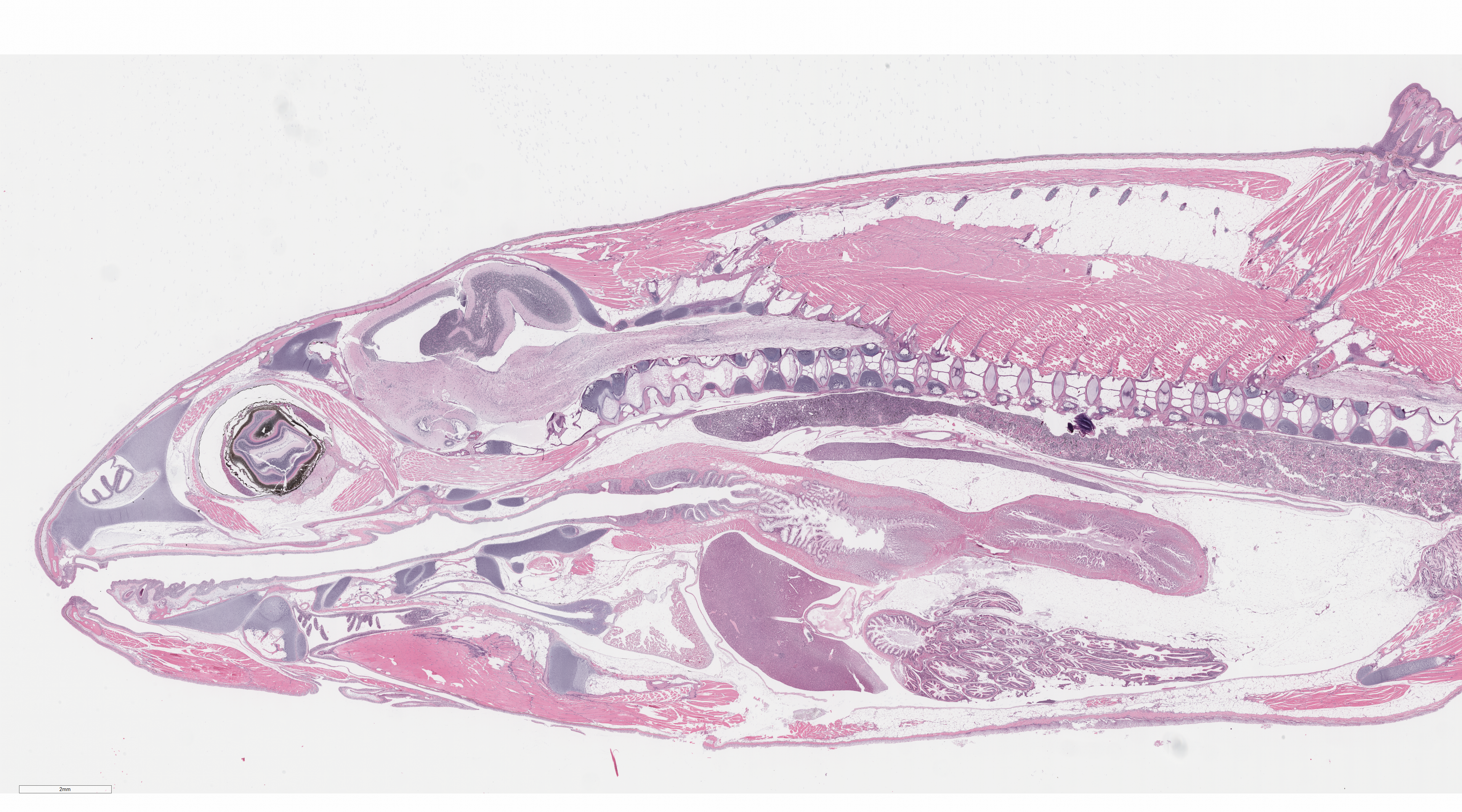
Digitization cuts diagnostic wait times and expands access to global expertise.
The phrase “Dead men tell no tales” may be the stuff of 19th-century pirate legend, but in 21st-century aquaculture science, the opposite is true: dead fish do tell tales.
For decades, histopathology – or the microscopic study of post-mortem fish tissue – has been used by fish farmers around the world to diagnose diseases or gain insight into the health of their fish population. Today, this conventional method is being redefined by digitization, unlocking faster diagnosis, transcending geographical boundaries and enabling near-instantaneous consultation with global experts.
This transition has been clearly needed in Canada, where histopathology has always been extensively used. However, in recent years there has been increasing uncertainties around services available (shut down and flooding) and long processing times.
In British Columbia, a partnership between Pharmaq and Campbell River-based BC Centre for Aquatic Health Sciences (BC CAHS) is transforming histopathology services for Canada’s aquaculture sector. Using a digital slide scanner, which Pharmaq procured for the BC CAHS lab in 2024, samples processed by the lab and mounted on glass slides are now being scanned to generate high-resolution images of the tissue samples. These digital images can then be shared with Pharmaq Analytiq’s histopathology experts on the other side of the world within hours, instead of days.
“This collaboration came at the request of B.C. salmon farmers, who were wanting additional histopathology services in the wake of the 2021 Abbotsford flooding that shuttered the Animal Health Center for a good portion of 2022,” says Michael Ness, Business Manager – Aquaculture for Pharmaq Canada. “This digital histopathology offers a way to decrease the turnaround time as there’s no shipment wait times and we can get reports out quite quickly – typically within five to seven days from the time the samples are dropped off,” he says.
Headquartered in Norway and with offices across Canada, the U.K., Chile, Brazil, Latin America, Vietnam and the Mediterranean, Pharmaq offers vaccines and therapeutics, vaccination services and machines, and fish health diagnostic and research services. The company’s global histopathology team consists of 14 veterinary pathologists, some of whom have PhDs and achieved European or American diplomate of veterinary pathologists designations.
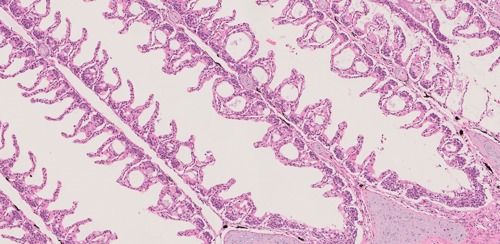
“Our team of global histopathologists have decades of experience and they really bring diverse and valuable perspectives and insights from different regions,” Ness notes. “Having a fresh set of eyes looking at Canadian cases complements the local histopathologists with specific regional experience. Additionally, Pharmaq’s histopathologists working directly on Canadian cases have received unique training specific to Canada.”
Although a single histopathologist may work directly with a customer, that individual is supported by Pharmaq’s entire global pathology team, says James Hoare, head of pathology at Pharmaq Analytiq in the U.K. That global support is enabled by the digitized slides and modern communications tools.
“This gives the customer the benefit of a collective second opinion without delays or extra steps. As a result, complex or unusual cases can draw on the shared expertise of multiple histopathologists rather than relying solely on one person’s perspective.
“In addition, challenges that appear new or emerging in Canada may already be well-characterised in another geographic region or fish species,” Hoare points out.
Pharmaq’s partnership with BC CAHS has been a valuable tool for Mowi Canada West’s fish health management protocols, according to Terra MacDonald, fish health manager and veterinarian at Mowi.
“Having that scanner and having that processing ability so close – and then being able to send that directly to the Pharmaq histopathologist – has definitely expanded the option for us, which is super valuable,” MacDonald says.
She notes while Mowi still relies on local pathologists, especially those with B.C.-specific knowledge, getting additional insight from different pathologists across the world who can provide a different perspective or opinion is extremely valuable.
Mowi Canada West uses histopathology as part of its “whole fish approach” to detect health issues that other methods, such as qPCR and bacteriology, might miss. While sensors can track environmental threats like plankton blooms or jellyfish, histopathology helps determine the actual physical impact on the fish, such as whether an event is acute or a chronic systemic risk.
Beyond crisis response, routine screenings of post-mortem samples also allow Mowi to verify the general wellbeing of a population at a cellular level.
“It gives us an overall view of the condition of the fish – things like fat stores, gill condition, skin condition – where we can say, ‘Yes, this fish has abundant nutritional status, the gills are looking good.’ We can use fish condition as determined by histopathology as a reassurance that the fish are healthy, suggesting an underlying health issue is less likely,” MacDonald says.
The availability of digital pathology has shifted the industry from retrospective analysis toward responsive, real-time decision-making. Historically, a fast turnaround time has not been prioritized or even possible for histopathology, meaning that results often arrived long after a health event had passed. Now, with high-resolution scans available within hours of processing, farmers can move from simple diagnosis to active management.
This speed is particularly critical for optimizing fish handling, for example.
Mortality events or disease outbreaks often occur when fish are handled while harbouring pre-existing subclinical disease processes or abnormalities, Hoare explains.
“Using histopathology as part of pre-handling and pre-treatment health assessments can help identify underlying pathological changes or disease conditions, such as acute gill damage, that may compromise fish health during potentially stressful procedures,” Hoare says.
These insights allow for immediate decision-making, such as delaying a treatment to prioritize recovery or altering handling methods to safeguard fish welfare.
This digital workflow also provides a vital alternative and complement to provincial laboratories, which can often become inundated with samples, leading to diagnostic bottlenecks.
Pharmaq’s customer service approach is driven by strong, collaborative relationships with farmers. The company views itself as a reliable partner, helping clients enhance productivity and animal welfare.
“We will engage with the customer to fully understand their needs and requirements, offering expert guidance on sampling and tissue assessments while outlining any potential limitations. Our approach is collaborative, working closely with the customer to support the achievement of their key objectives,” Hoare explains.
It is also this customer-centric view that played a key role in the development of the BC CAHS partnership, resulting in the introduction of the digital histopathology service.
“BC CAHS has been really key to this. They’ve done an excellent job in taking on this new service, and they see it as an essential need for customers here in B.C.,” Ness says.
Looking ahead, histopathology will become even more precise as Pharmaq integrates machine learning and artificial intelligence into its diagnostic suite. While a human pathologist provides the critical context and final diagnosis, AI models are being developed to improve the accuracy in quantifying tissue changes.
“The use of machine learning and artificial intelligence will not replace the primary role of the histopathologist, but we see them as important and valuable tools moving forward,” Hoare says. “Their development within Pharmaq is actively guided by histopathologists to ensure accuracy and reliability.”
Currently, these advancements are already being used to handle “specific tissue quantitative assessments” that are traditionally labour-intensive, such as those required in drug and feed development trials. While many of these applications are currently focused on research and development, Hoare notes they will likely soon “filter down into routine use in diagnostic settings.”
This evolution will enable the integration of “disease tagging” and AI into Pharmaq’s iWISE digital platform, enabling customers to filter their own case material based on specific disease entities or pathological changes.
“This will support the study of disease trends and allow pathology data to be cross-referenced with other data sets,” Hoare says.
For more information about our services, contact Michael Ness, Business Manager, Aquaculture Canada
Head office/Production facilitySkogmo IndustriområdeIndustrivegen 50N-7863 Overhalla, NorwayTel:+47 74 28 08 00
PHQ.customer.service@zoetis.com


PHARMAQ is the global leader in vaccines and innovation for aquaculture and part of Zoetis, the world leader in animal health. The company provides environmentally sound, safe and efficacious health products to the global aquaculture industry through targeted research and the commitment of dedicated people. Production facilities, administration and research and development activities are based in Norway with subsidiaries in Chile, United Kingdom, Vietnam, Turkey, Spain, Panama and Hong Kong. PHARMAQ has approximately 300 employees. The company's products are marketed in Europe, North and South America, and Asia. For further information, visit the company's website at www.pharmaq.com. Privacy Policy. Cookie Policy. Terms of Use.
Copyright © 2020 Zoetis LLC. All rights reserved.